

For many CNC operations, productivity is still evaluated machine by machine. Cycle time, spindle utilisation, setup duration and parts per shift are tracked at individual assets, while labour is assigned according to established routines. That approach can obscure a larger opportunity: improving the productivity of the entire machining cell rather than optimising each machine in isolation.
A CNC machine may run automatically once the door closes and the program starts, yet it still depends on people for loading blanks, unloading finished parts, cleaning fixtures, checking components and responding to interruptions. When these activities are organised manually, the operator often becomes the link between several otherwise automated processes.
The more useful question is therefore not simply how fast a machine can cut. It is how much productive machining one operator can reliably support across the cell.
Why Machine Cycle Time Is Only Part of the Equation
A machining cycle consists of more than material removal. Between cutting cycles, someone or something must exchange the workpiece and prepare the machine for the next operation.
Consider a component requiring several minutes of machining but only a short period for unloading and reloading. The operator may spend much of the cycle waiting before returning at precisely the right moment. Assigning that person another machine appears logical, but coordination becomes increasingly difficult as cycle times drift.
Tool wear, inspection routines, chip accumulation and minor stoppages disrupt even carefully planned sequences. Two machines that should finish several minutes apart can suddenly require attention simultaneously.
This creates a familiar operational pattern: theoretical labour capacity is higher than practical labour capacity. Operators may technically be able to oversee several machines, but the cell remains dependent on their ability to move between them at exactly the right times.
The Hidden Cost of Operator-Dependent Machine Utilisation
Manual tending does not necessarily create problems when production volumes are low, cycles are irregular or frequent human judgement is required. Difficulties arise when repetitive loading becomes the factor determining whether expensive machining assets continue producing.
Every time a completed component waits inside a machine, the spindle is unavailable for productive work. A delay of less than a minute may appear insignificant when viewed individually. Repeated over many cycles and several machines, however, those interruptions become a structural source of lost capacity.
The same applies when operators deliberately avoid running multiple machines because overlapping cycles would create an unmanageable workload. The constraint is no longer machining technology. It is the architecture of the production process.
This is why continuous improvement teams should distinguish between machine cycle efficiency and cell flow efficiency. A well-optimised CNC program cannot compensate for avoidable idle time between cycles.
Moving From Machine Staffing to Cell Supervision
Automation changes the role of the operator rather than simply removing a loading task.
In a manually tended environment, operators remain closely tied to machine completion signals. Their work rhythm is dictated by individual CNC cycles. In a more automated cell, repetitive part transfer can be separated from higher-value responsibilities such as quality verification, tool management, material replenishment and exception handling.
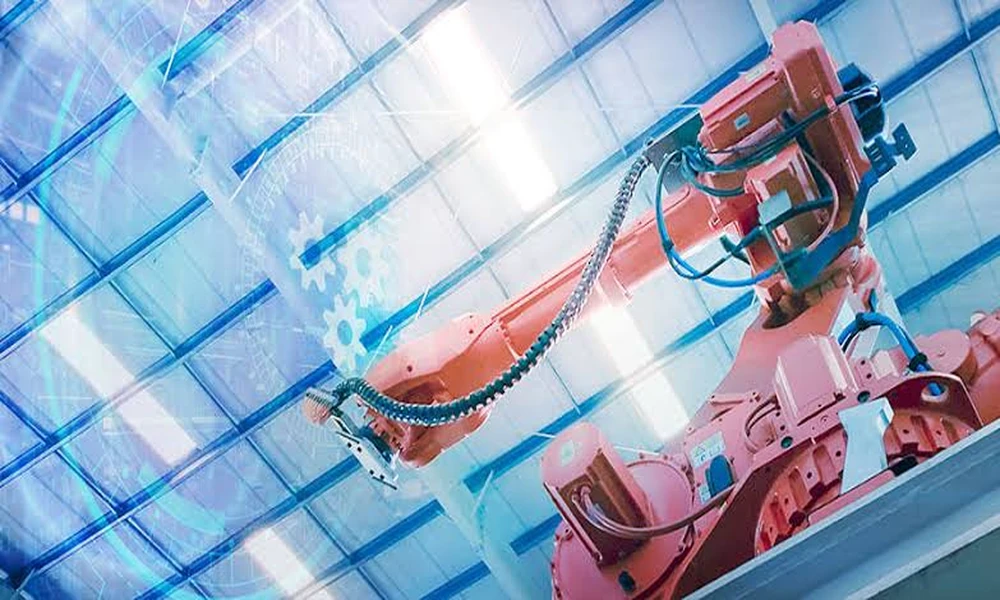
A properly engineered machine tending robot can therefore be evaluated not only by the loading operation it performs, but by whether it allows labour to be organised around the needs of the wider production process.
The distinction matters. Replacing a person at one machine without reconsidering workflows may produce limited benefits. Reconfiguring the cell so that one operator supervises several predictable automated processes can change the labour-to-equipment relationship much more fundamentally.
What Makes Multi-Machine Tending Work
Simply placing automation beside several CNC machines does not create an efficient cell. The surrounding process must be capable of supporting unattended or lightly supervised operation.
Predictable Part Presentation
Incoming blanks need to arrive in known positions and orientations. The more variation introduced before loading, the more sensing, fixturing or operator intervention the system requires.
The objective is not necessarily maximum technological sophistication. Often, simple and repeatable material presentation produces the most robust automation.
Stable Workholding
Fixtures must allow consistent loading and reliable confirmation that the component has been seated correctly. Chips, coolant and dimensional variation can all interfere with this process.
A cell designed for repeated automated loading may therefore require improvements to locating surfaces, clamping logic, chip evacuation or fixture access.
Reliable Process Communication
The tending equipment and CNC machine must exchange the information required to coordinate operation safely. Depending on the application, this can include machine-ready signals, door status, chuck or fixture confirmation, cycle completion and fault conditions.
Without clear process communication, automation merely transfers uncertainty from the operator to the equipment.
Cycle-Time Balance Becomes a Cell-Level Design Problem
When one operator supports multiple automated machines, differences in CNC cycle time become easier to manage because the operator no longer needs to arrive at every machine immediately after completion.
However, automation itself still has a cycle.
Part removal, cleaning, loading, gripping changes and machine interaction all consume time. Engineers therefore need to evaluate whether the tending sequence fits comfortably within the machining cycle and whether one automated system can service multiple assets without creating queues.
This is where simulation and detailed time studies become valuable. The objective should not be to achieve perfect theoretical synchronisation. Manufacturing processes inevitably vary. A better target is sufficient timing margin to absorb normal process variability without destabilising the cell.
Operator Productivity Should Be Measured Differently
Traditional labour metrics can become misleading after automation.
If an operator previously ran two CNC machines and later supervises four automated machines, measuring only direct labour minutes per machine misses important changes in responsibility. The operator may now spend more time on quality checks, replenishment, tool preparation and resolving exceptions.
A stronger set of indicators includes spindle utilisation, unattended operating time, interventions per shift, machine waiting time, output per labour hour and the frequency of automation-related stoppages.
These metrics help distinguish genuine productivity gains from situations in which labour has simply been displaced into troubleshooting.
Maintenance and Recovery Cannot Be an Afterthought
The economics of multi-machine cells depend heavily on availability. A minor automation fault affecting one isolated machine may have limited consequences. A fault affecting equipment responsible for several CNC machines can influence a much larger share of production.
Maintenance teams therefore need clear recovery procedures. Operators should understand which interruptions they can safely reset themselves and which require technical support.
Accessibility also matters. Sensors, grippers, fixtures and interfaces should be positioned so routine maintenance does not require extensive dismantling.
Automation that is difficult to recover is difficult to scale. Designing for diagnosis and restart is therefore just as important as designing the nominal operating sequence.
The Real Opportunity Is Better Allocation of Human Attention
The case for CNC tending automation is strongest when repetitive machine interaction prevents skilled employees from supervising larger sections of production.
A machinist’s knowledge is more valuable when applied to process stability, tool condition, dimensional control and problem solving than when repeatedly opening doors and exchanging parts. The same principle applies to production managers evaluating labour constraints and system integrators designing future cells.
The goal is not maximum automation for its own sake. It is a production architecture in which machines handle predictable repetition while people manage variability and judgement.
When CNC productivity is viewed at cell level rather than machine level, the role of automation becomes clearer. The central question shifts from how many machines require an operator to how many machines one capable operator can effectively supervise. That change in perspective can reveal capacity that conventional machine-by-machine staffing models leave unused.